
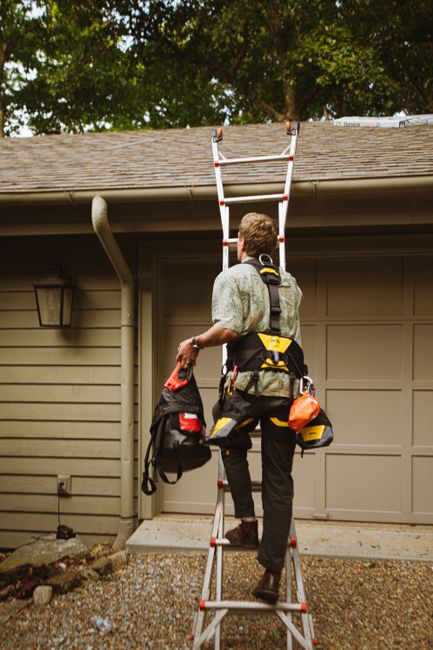
Hanging lights along a roofline can make a home feel welcoming during the darker months, but the work combines ladders, electricity, cold weather, and roofing materials. In Plattsburghh, NY, seasonal decorating may also involve snow, ice, wind, and freeze-thaw conditions that can make a setup unsafe if it is installed too early, attached too tightly, or left in place too long.
The safest approach is to keep both feet off the roof whenever possible, use lighting designed for outdoor conditions, and attach decorations without puncturing shingles, flashing, siding, or trim.
Is it safe to stand on the roof to hang lights?
Usually, no. Most roof lighting can be installed from a properly positioned ladder or from the ground using an extension pole designed for light clips. Walking on a roof increases the risk of falling and can damage shingles, especially when the surface is cold, damp, frosty, steep, or covered with moss.
Avoid roof access entirely when:
- The roof is wet, icy, snowy, or visibly slippery
- Wind makes the ladder or light strands difficult to control
- The roof is steep, high, fragile, or difficult to reach safely
- Power lines are near the work area
- The person installing the lights is uncomfortable using an extension ladder
- The roof has loose shingles, soft spots, exposed underlayment, or damaged flashing
A roof that looks dry from the ground may still have frost or thin ice along shaded edges. Winter daylight can also fade quickly, making it harder to see hazards.
How should a ladder be positioned?
A ladder should stand on firm, level ground, away from snowbanks, ice, loose soil, and uneven landscaping. Never place a ladder on top of boxes, buckets, decking furniture, or packed snow to gain extra height.
For an extension ladder leaning against a wall or roof edge, use the standard four-to-one setup: for every four feet of ladder height, the base should be about one foot away from the structure. The ladder should extend above the landing point when it is being used to step onto a roof-level surface, but stepping onto the roof should generally be avoided for light installation.
The ladder should rest against a strong, stable surface rather than gutters, downspouts, decorative trim, or loose siding. Gutters are not designed to support a person or to serve as a ladder brace.
Have another adult hold the ladder while lights are being installed. Keep the body centered between the side rails, climb facing the ladder, and avoid reaching sideways. Moving the ladder takes less time than trying to stretch several feet from an unstable position.
A nonconductive ladder is the safer choice around electrical equipment. Keep ladders and long light strands well away from overhead electrical lines.
What type of lights and cords are suitable outdoors?
Use light strings and extension cords clearly marked for outdoor use. Indoor-only lights may not have insulation, socket protection, or weather resistance suitable for exposure to rain, snow, and temperature changes.
Before installation, inspect every strand for:
- Frayed, cracked, crushed, or discolored insulation
- Loose sockets or missing bulbs
- Exposed wire
- Bent or damaged plugs
- Signs of overheating or melting
- Broken clips or connectors
Discard damaged light strings instead of covering defects with electrical tape. A cord that appears functional may still allow moisture to reach energized parts.
Outdoor lighting should be plugged into a ground-fault circuit-interrupter, commonly called a GFCI, which helps shut off power when electricity travels along an unintended path. If a GFCI trips repeatedly, unplug the lights and investigate the problem rather than repeatedly resetting it.
Do not overload receptacles or connect more light strings than the manufacturer allows. Use the correct outdoor-rated extension cord length, and keep plug connections raised off the ground and protected from standing water without enclosing them in a way that traps moisture.
What is the safest way to attach lights to a roofline?
Plastic light clips designed for the specific type of light are generally safer than nails, screws, staples, or improvised fasteners. Clips can attach to compatible gutters, fascia edges, shingles, or trim without creating holes.
Do not drive fasteners through shingles or roofing underlayment. A small puncture can become an entry point for water, particularly after repeated expansion and contraction during freeze-thaw cycles. Avoid attaching decorations directly to flashing, drip edges, ridge vents, plumbing vents, or other components that need to shed water or move slightly.
Never use ordinary metal staples across electrical cords. Staples can cut or crush insulation and may create an electrical shock or fire hazard. If a fastening device is used, it should be specifically made for outdoor light installation and should hold the cord without pinching it.
Leave enough slack for normal movement. Lights pulled tightly across a roof edge can place stress on sockets, connectors, gutters, and clips when wind or snow loads act on the strand.
How should lights be handled near gutters and snow?
Gutters can support light clips in some situations, but they should not carry heavy decorations or be used to support a ladder. Keep lights from blocking downspouts and avoid creating low spots where water can collect.
In a snowy climate, roof edges may develop ice dams or heavy snow buildup. Do not install cords where they may be buried under snow or trapped in ice. Avoid using heat-producing devices to melt ice around lights or gutters. Artificially melting snow can redirect water into areas where it may refreeze and cause additional damage.
Do not place lighting where falling snow, sliding ice, or roof runoff will pull on the cords. Icicles can damage strands and create a falling-object hazard below.
Should lights be left on overnight?
Turn off roof lights before leaving the home or going to sleep unless they are specifically designed and installed for continuous operation according to their instructions. Timers can reduce the chance of lights being left on unintentionally, but a timer does not correct damaged wiring, overloaded circuits, or poor installation.
During severe weather, unplug the lights. Strong wind, freezing rain, heavy snowfall, or rapidly accumulating ice can pull clips loose and strain cords. After a storm, inspect the setup from the ground before reconnecting power.
When should roof lights be removed?
Remove temporary lights after the decorating season rather than leaving them exposed year-round. Prolonged sunlight, moisture, ice, and temperature swings can weaken insulation and plastic components.
Take the lights down during a dry, calm period using the same ladder precautions used during installation. Do not yank on strands to remove clips. Pulling can damage shingles, gutters, fascia, sockets, and electrical connections.
If a light installation requires walking on a steep or damaged roof, working near electrical lines, or handling a ladder in icy conditions, postponing the task is safer than trying to complete it under hazardous conditions. Some roof and electrical situations should only be handled by a qualified person with the right equipment and training.
